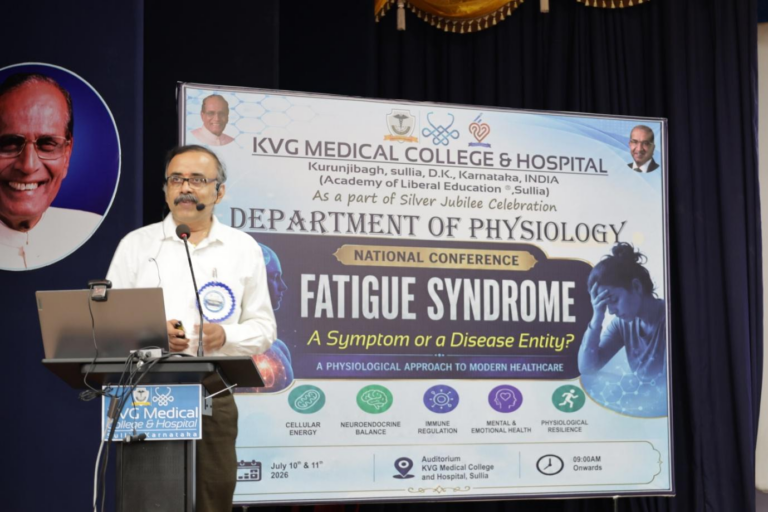
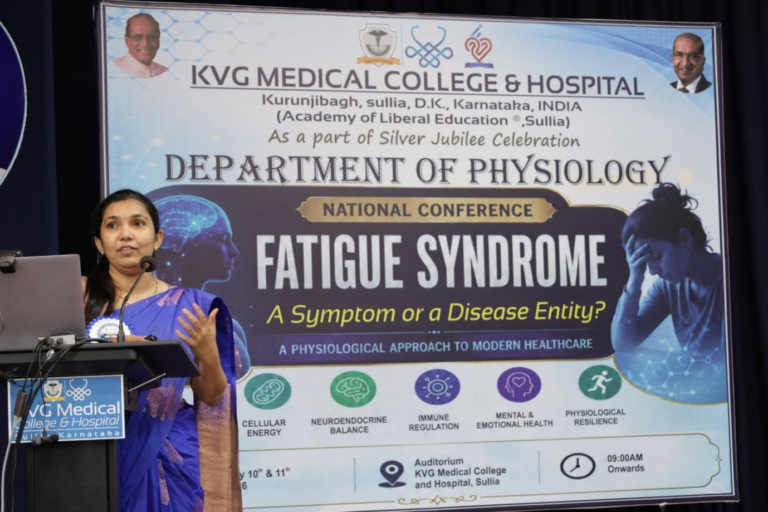
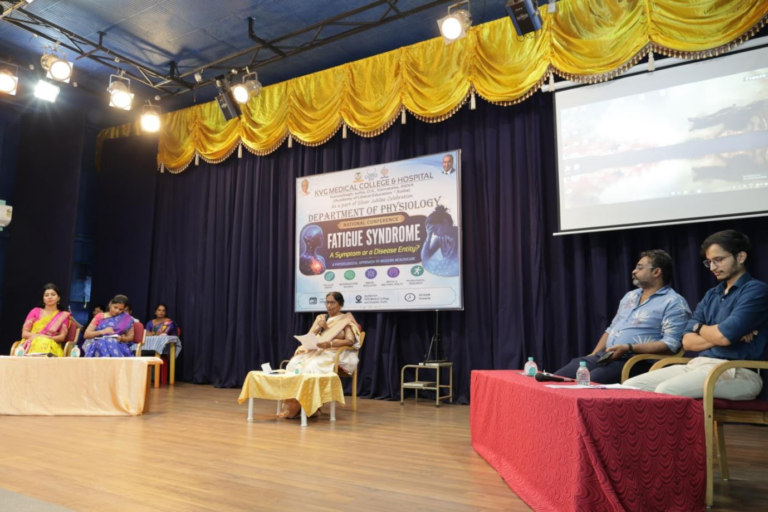
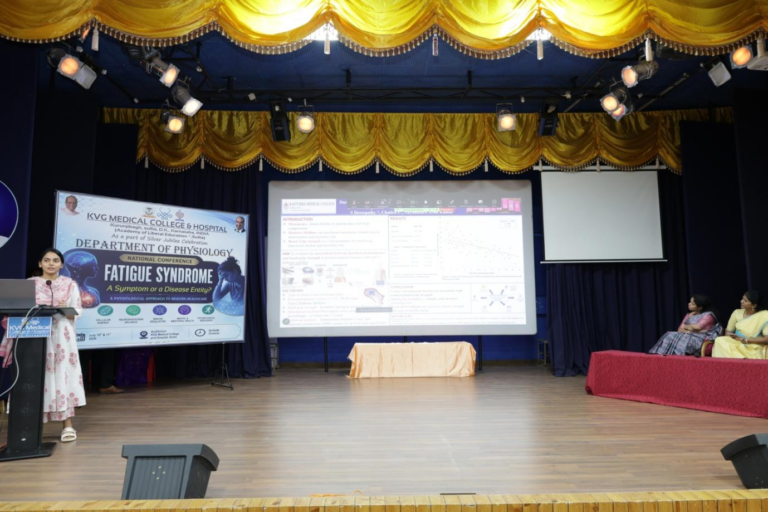
The Department of Physiology, KVG Medical College & Hospital, Sullia, Dakshina Kannada, successfully organized a Pre-Conference Workshop on 10 July 2026 followed by a National Conference on “Fatigue Syndrome” on 11 July 2026. The event brought together eminent academicians, clinicians, researchers, postgraduate students, and healthcare professionals from various medical institutions across the country to discuss the multifaceted aspects of fatigue syndrome and its management.
The programme was designed to provide a comprehensive understanding of fatigue from physiological, biochemical, nutritional, psychological, and technological perspectives while promoting interdisciplinary learning and research.
Pre-Conference Workshop
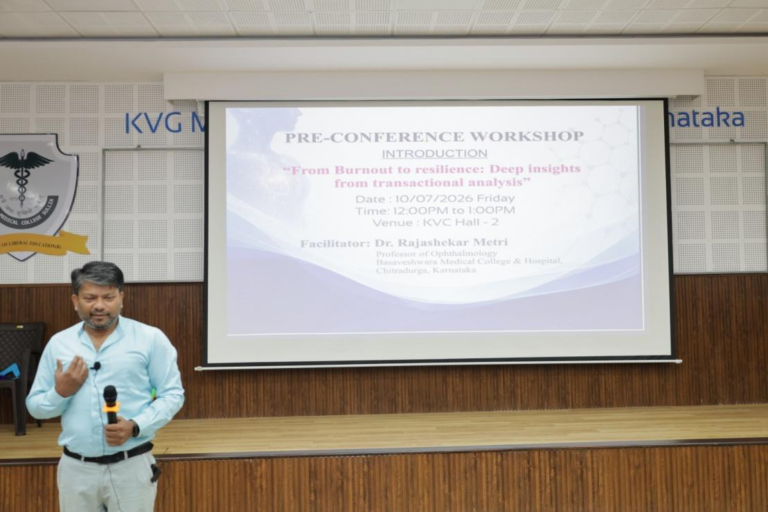
As a prelude to the National Conference, a Pre-Conference Workshop titled “From Burnout to Resilience: Deep Insights from Transactional Analysis” was conducted on 10 July 2026 from 12:00 PM to 5:00 PM. The workshop was facilitated by Dr. Rajashekar Metri, Professor, Department of Ophthalmology, Basaveshwara Medical College & Hospital, Chitradurga.
The workshop focused on understanding burnout, emotional resilience, stress management, and interpersonal communication through the principles of Transactional Analysis. Participants gained practical insights into recognizing psychological stressors, enhancing self-awareness, improving professional relationships, and developing resilience through interactive discussions and reflective activities. The engaging and participatory sessions promoted experiential learning and provided valuable strategies for fostering well-being in both personal and professional life.
Dr. Rajashekar Metri
From Burnout to Resilience: Deep Insights from Transactional Analysis
National Conference – Scientific Sessions
The National Conference commenced on 11 July 2026 with registration from 8:30 AM to 9:00 AM, followed by a series of scientific sessions delivered by distinguished faculty members from reputed medical institutions across India.
The first scientific session on “Basics of Fatigue Physiology” was delivered by Dr. Biju Bahuleyan, Professor and Head, Department of Physiology, Jubilee Mission Medical College, Thrissur. The lecture explained the physiological mechanisms underlying fatigue, neuromuscular function, and energy metabolism. The session was chaired by Dr. Swati Sinha, Associate Professor, Department of Physiology, Bhagwan Mahavir Institute of Medical Sciences, Bihar, and Dr. Damodar D, Professor, Department of Physiology, KVG Medical College & Hospital, Sullia.
Dr. Biju Bahuleyan
Basics of Fatigue Physiology
Inauguration Ceremony
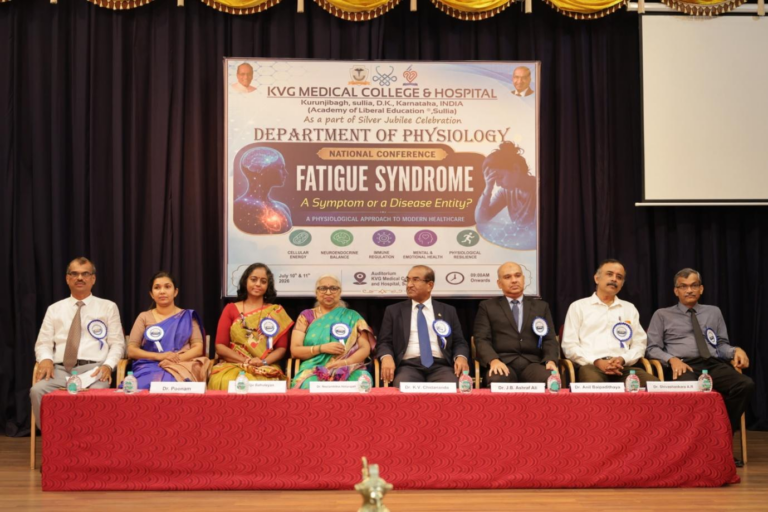
The National Conference on “Fatigue Syndrome” was formally inaugurated on 11 July 2026 from 9:45 AM to 10:00 AM.
The inaugural ceremony commenced with an invocation rendered by Mrs. Rakshatha Ramesh, Tutor, Department of Physiology, KVG Medical College & Hospital, Sullia.
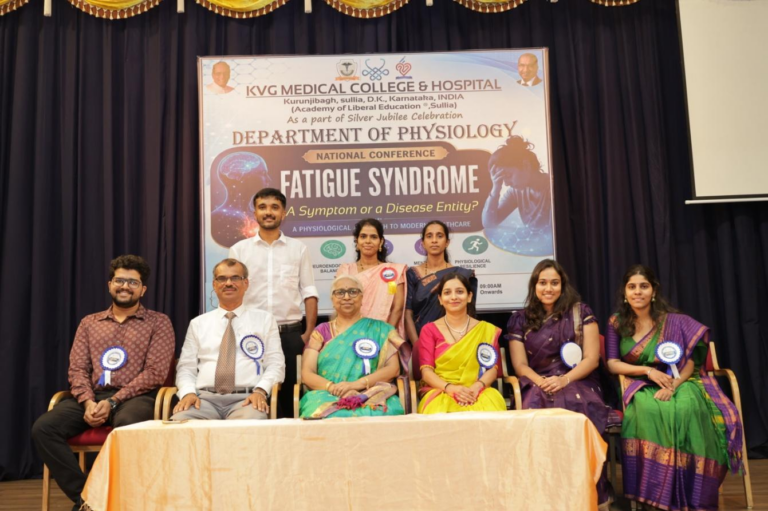
The Welcome Address was delivered by Dr. Damodar D, Professor, Department of Physiology, KVG Medical College & Hospital, Sullia, who welcomed the distinguished guests, speakers, chairpersons, delegates, and participants.
The ceremonial Lighting of the Lamp was performed by the President, Dean, esteemed dignitaries, and invited speakers, symbolizing the formal commencement of the conference.
This was followed by the Dean’s Address by Dr. Neelambikai Natarajan, Dean, KVG Medical College & Hospital, Sullia
The Presidential Address was delivered by Dr. K. V. Chidananda, President, Academy of Liberal Education, KVG Medical College & Hospital, Sullia. The invited speakers were felicitated as a token of appreciation for their esteemed presence and valuable contributions to the scientific programme.
The ceremony concluded with the Vote of Thanks proposed by Mrs. Rakshatha Ramesh, Tutor, Department of Physiology, KVG Medical College & Hospital, Sullia.
The second scientific session on “Biomarkers in Fatigue Syndrome” was delivered by Dr. Shivashankara A. R., Professor, Department of Biochemistry, Father Muller Medical College, Mangalore. The session highlighted the role of biochemical and inflammatory biomarkers in the diagnosis and monitoring of fatigue syndrome. The session was chaired by Dr. Anand K. S. S.Professor&Head ,Dept of PhysiologyAdichunchanagiri institute of medical sciences and Dr. Shivarajashankara Y. M.Professor & Head Dept of BiochemistryKVGMCH Sullia
Dr. Shivashankara A. R.
Biomarkers in Fatigue Syndrome
Following the tea break, Dr. J. B. Ashraf Ali, Assistant Professor, Department of Physiology, Government Thiruvarur Medical College, Tamil Nadu, presented a lecture on “AI – Digital Monitoring of Fatigue,” highlighting the role of artificial intelligence, wearable devices, and digital technologies in fatigue assessment and patient care.The session was chaired by Dr. Anand K. S. S.Professor & Head,Dept of PhysiologyAdichunchanagiriInstitute of Medical Sciences and Dr. Shivarajashankara Y. M.Professor & Head Dept of BiochemistryKVGMCH Sullia
Dr. J. B. Ashraf Ali
AI – Digital Monitoring of Fatigue
The fourth scientific session on “Nutrition, Hydration and Fatigue Management” was delivered by Dr. Anil Baipadithaya, Professor, Department of Obstetrics & Gynaecology, KVG Medical College & Hospital, Sullia. The lecture emphasized the importance of balanced nutrition, adequate hydration, and healthy lifestyle modifications in the prevention and management of fatigue. The session was chaired by Dr. Sachin K. S., Professor and Head, Department of Anatomy, KVG Medical College & Hospital, Sullia, and Dr. Sathisha Aithal, Professor and Head, Department of Pharmacology, KVG Medical College & Hospital, Sullia.
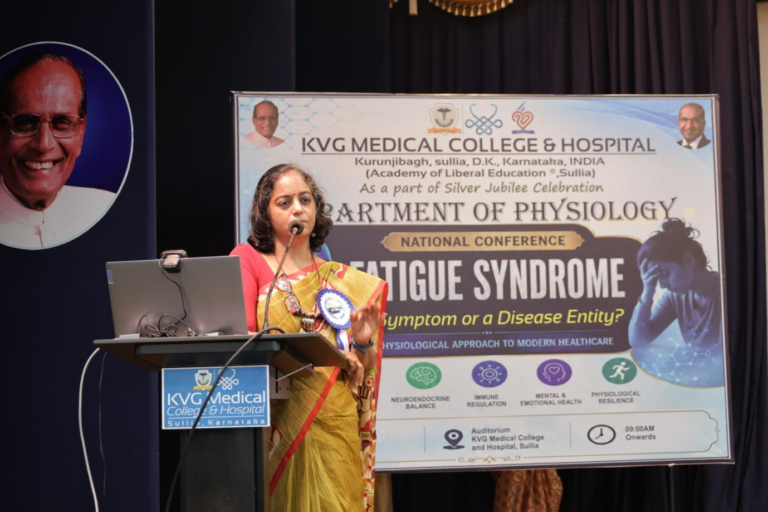
Dr. Anil Baipadithaya
Nutrition, Hydration and Fatigue Management
The fifth scientific session on “Mental Health and Fatigue” was delivered by Dr. Poonam, Professor and Head, Department of Psychiatry. The lecture highlighted the psychological aspects of fatigue and emphasized the importance of addressing mental health through a comprehensive and multidisciplinary approach to patient care. The session was chaired by Dr. Sachin K. S., Professor and Head, Department of Anatomy, KVG Medical College & Hospital, Sullia, and Dr. Sathisha Aithal, Professor and Head, Department of Pharmacology, KVG Medical College & Hospital, Sullia.
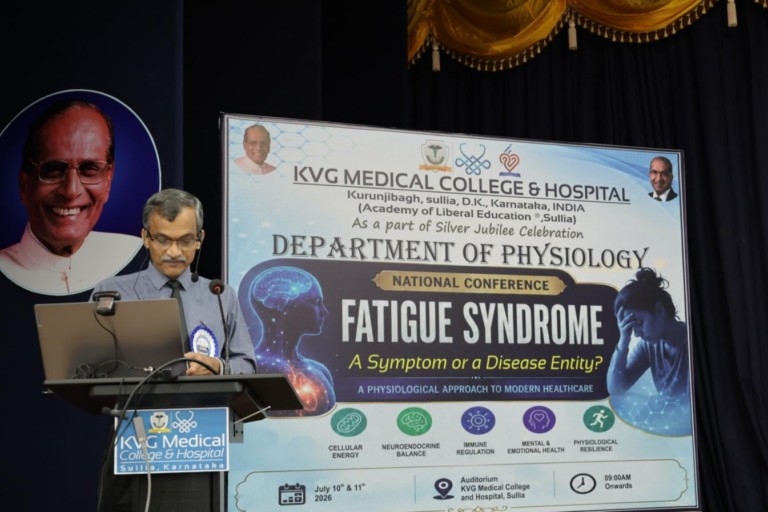
Dr. Poonam
Mental Health and Fatigue
Following lunch, an engaging Debate on “Can Technology Reduce Fatigue?” was moderated by Dr. Sathyavathi R. Alva, Professor and Head, Department of Pathology, KVG Medical College & Hospital. The proposition was presented by Dr. Bharath Shetty and Dr. Nitin Bhat, while Dr. Apoorva Dore and Dr. Sunitha Biradar argued the opposition. The session generated thought-provoking discussions and enthusiastic audience participation.
Debate – “Can Technology Reduce Fatigue?”
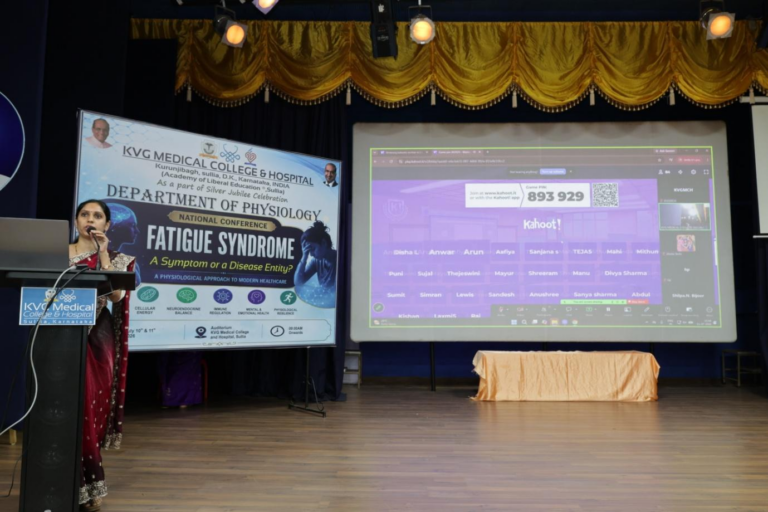
An interactive “Fatigue Syndrome Knowledge Quest”, coordinated by Dr. Anjali Rao K., Associate Professor, Department of Pathology, KVG Medical College & Hospital, Sullia, was conducted for the audience using the Kahoot platform. The quiz assessed participant’s understanding of the topics covered during the conference and witnessed enthusiastic participation from the delegates. The winners securing the first, second, and third positions were awarded certificates and prizes.
Dr. Anjali Rao K
Fatigue Syndrome Knowledge Quest
The academic programme concluded with Oral, Poster, e-Paper, and e-Poster Presentations, during which delegates presented their research findings. The presentations were evaluated by Dr. Navya B. N., Professor, Department of Pathology, and Dr. Shruthi P. Rai, Professor, Department of Biochemistry, KVG Medical College & Hospital, Sullia. Participantswere awarded certificates of participation.
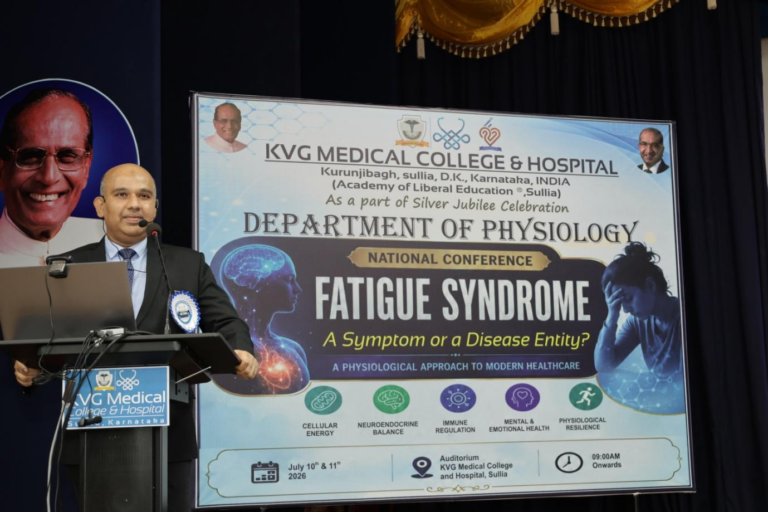
The conference concluded with the Valedictory Session, marking the successful completion of the academic programme. The organizers conveyed their appreciation to all the speakers, chairpersons, judges, delegates, faculty members, and participants for their valuable contributions towards the success of the event. The programme concluded with the National Anthem.
Conclusion:
The Pre-Conference Workshop and National Conference served as an enriching academic platform, fostering a deeper understanding of fatigue syndrome through diverse physiological, biochemical, psychological, nutritional, and technological perspectives. The programme facilitated interdisciplinary knowledge exchange, scholarly interaction, and professional enrichment, culminating in a successful and memorable academic endeavour.